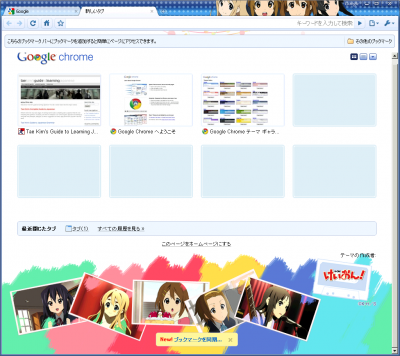
There’s a fairly large thread about the merits (or lack thereof) of learning Japanese via anime on my main grammar guide page which I deleted primarily to keep the page clean (and it’s also off-topic). I will follow up with a more detailed post but to sum up my opinion on the matter, I would say anything that engages you and helps you spend more time using Japanese is a good thing. However, it also depends on what anime/manga you’re using. The important thing is that you’re using anime/manga to learn Japanese and not just trying to translate or learn Japanese to watch anime or read manga.
Here’s the full thread:
Hi i am from india
I am watcing the japanese anime last 1 year.But i learned basics of japanese language how to learn japanese language
Posted by Anonymous on Apr 22nd, 2010 at 1:44 am.——————————————————–
I think it’s great that you’re learning Japanese, for whatever reason.
Don’t listen to people that say anime/manga is not a good reason.Good luck with your studies!
——————————————————–
Don’t learn Japanese because of anime. The real Japan is completely different than what anime-fans think. You should work on learning English first if you’re going to consult in this language.
——————————————————–
Why do you think so,..???
I think your argument is false…
Bacause javanese language is most popular in my country…——————————————————–
Trust me, it is not a great idea to learn Japanese just because of anime. It is a really shallow reason because the truth is, as any Japanese person would tell you, anime is just TV shows and does not bring insight to the culture. Learn Japanese if you intend to interact with Japanese people, which would broaden your world more than just an easy way to watch TV.
——————————————————–
You should learn a language for the reason that you want to learn it. It’s annoying when people flank out or look down on anime or manga as an invalid reason or resource for language study – it just shows ignorance on the part of the person giving the opinion.
Denying anime as a resource or considering it ‘shallow’ is denying an element of Japanese culture. A lot of Japanese people would not consider it to be irrelevant or pointless, plus it’s a great way to improve listening and pronunciation without having to struggle through a news bulletin or a long documentary.
Japanese is the third foreign language I’ve studied to a post-school level and the advantage of it over others is the diversity of material available. I was taught to use all and every available resource when studying a foreign language because that’s the only way to learn it naturally as well as grammatically.
I didn’t start learning Japanese becuase of anime – I have an interest in the history and family connections to the country. On my bookshelf are copies of the Heike Monogatari in it’s original kobun, so I take studying Japanese very seriously. However, I have found anime extremely useful and educational along with several other resources. Plus, it’s fun. People seem to think if you have fun studying a language you’re doing something frivolous and wrong. Truth is it’s the opposite – you learn more if you learn from something you enjoy.
People also have this wrong idea that all anime is for children and involves the same stunted and repeated phrases through episode after episode. Doubtless these exist, but perhaps folk outside of Japan forget that anime is not the same as ‘cartoon’ and that it’s not always just for children. Imposing western ideas on learning an eastern language just makes learning it harder.
——————————————————–
Does it really matter what the reason is? As long as there is a genuine will to learn I think it’s all right. I started out with Anime as well, and got interested in the culture later.
No offence, but there’s really no need to try to stop someone from learning a language they’re interested in just because you don’t like the reason as to why they’re interested.——————————————————–
Agreed. I don’t know why some people think their reason for learning something is more superior than others.
——————————————————–
No, learning Japanese just to watch anime with is inane. Learning it to do business with is a superior reason.
——————————————————–
No, it’s not. Learning because of anime and learning because of you want to do business are both extrinsic rewards and doesn’t help motivate you to continue studying the language as much as intrinsic rewards. For example, an intrinsic reward is wanting to expand your views of the world or because it’s a challenge for you to overcome.
So what if they want to learn the language because of anime? Maybe they start out that way but ended up continue learning because they genuinely want to learn about the culture. If to do business is your only reason to learn Japanese… then I want to ask you, that’s it? Only business? Kind of a waste if you ask me. You’re not going to make friends with the language? You’re not going to visit and learn more about their culture? But if that’s what you want. It’s all you.